The dominant conversation about enterprise AI focuses on knowledge work. Chatbots that answer customer questions. Copilots that draft documents. Assistants that summarize meetings. This bias makes sense given who writes about AI for a living, but it distorts the picture of where the technology is actually creating economic value.
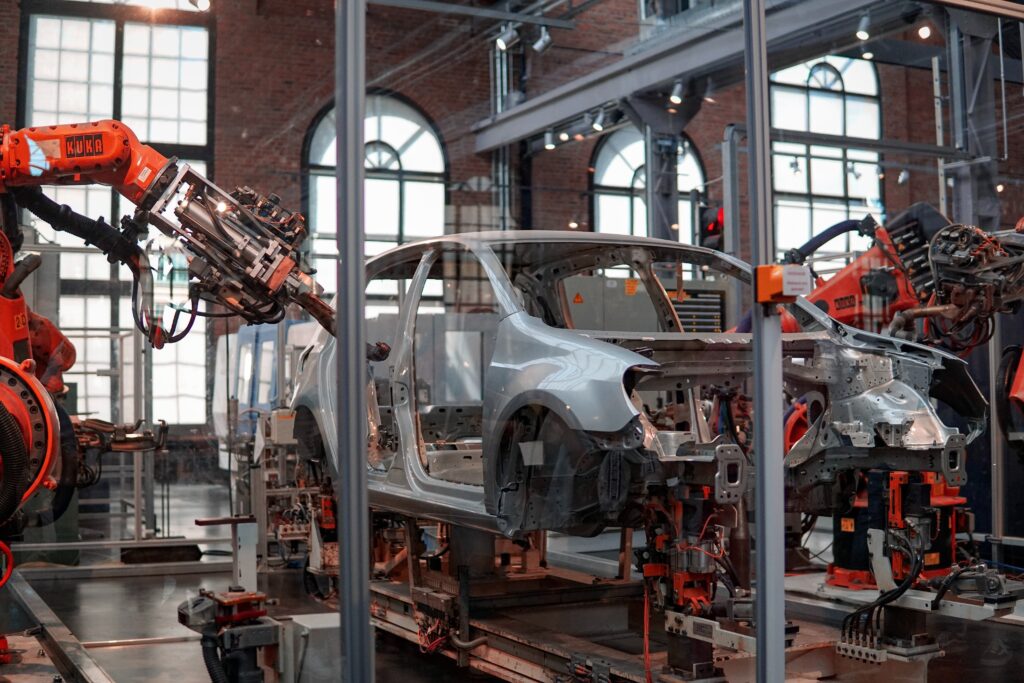
The largest opportunity for AI in software-intensive companies isn’t in the office; it’s on the factory floor, in the wind farm, on the railway line, in the chemical plant. Industrial operations represent a category of work in which the cost of failure isn’t measured by user inconvenience but by production downtime, safety incidents and regulatory consequences. AI applied to this domain isn’t a productivity enhancement; it’s a structural change in how industrial assets are operated.
For decades, industrial maintenance has operated within one of two regimes, both deeply suboptimal. Reactive maintenance allows equipment to run until it breaks, then repairs it. This minimizes maintenance spend in the short term but produces unpredictable downtime, expensive emergency repairs and occasional safety incidents that dwarf any savings achieved. Preventive maintenance, the alternative, services equipment on fixed schedules regardless of actual condition. This avoids the worst surprises but is fundamentally wasteful: Systems that don’t need servicing are serviced anyway, while those that deteriorate faster than the schedule anticipates fail between scheduled interventions. Both regimes treat the equipment as opaque; neither responds to what the equipment is actually doing.
A new generation of industrial AI is enabling a third regime: predictive maintenance based on continuous sensor data and machine learning. Equipment is monitored continuously, its condition assessed in real-time and maintenance is scheduled when the data indicates it’s needed, not before and not after. The economic and operational implications are significant, and the technology has now matured to the point where it’s no longer a research aspiration but a deployed reality at scale.
Three converging factors have made this possible. The cost of industrial sensors and connectivity has collapsed, making it economically feasible to instrument equipment that previously couldn’t justify the investment. Foundation models for time-series and vibration data have matured to the point where they can detect failure signatures before human experts can recognize them. And edge computing infrastructure can now run inference on the factory floor or on the asset itself, rather than requiring data to be shipped to a centralized cloud for processing. Each of these advances by itself was insufficient. Together, they’ve crossed a deployment threshold.
Augury is among the most mature companies operating in this space. The company combines proprietary IoT sensors that capture vibration, temperature and ultrasonic data with machine learning models trained on what it claims is the world’s largest dataset of industrial machine health information. Customers include Colgate-Palmolive, Pepsico, Hershey’s and ICL. A Forrester Total Economic Impact study commissioned in 2025 found that organizations deploying Augury’s machine health and process health solutions achieved a 310 percent return on investment over three years, with payback in less than six months. The company’s own published figures indicate five to twenty times ROI for typical deployments. Beyond the financial outcomes, the strategic story is the data flywheel. Every deployment generates failure data, repair data and operational data that improves the underlying model. Every model improvement makes the next deployment more valuable. This is the same compounding dynamic that’s characterized the most durable AI businesses in other domains, now operating in industrial maintenance.
Konux, headquartered in Munich, illustrates a different and equally instructive pattern. Rather than competing horizontally across industrial sectors, it’s built a deeply specialized position in rail infrastructure. The company combines IoT sensors deployed on switches and track infrastructure with AI-driven predictive analytics across the asset lifecycle. Deutsche Bahn, Europe’s largest rail operator, has been the anchor customer for over a decade. Konux now monitors more than 3,500 switches for DB, with 6,000 IoT devices deployed across Europe and over 500 million train traces collected. The verified outcomes are substantial: a forty percent reduction in repair downtime, more than fifty percent improvement in maintenance effectiveness and prediction accuracy validated at over ninety percent through Deutsche Bahn’s own verification procedure. The company has since expanded to similar long-term agreements with Network Rail in the United Kingdom, Adif in Spain and Infrabel in Belgium. Switch failures are among the most common causes of train delays across European networks, which means that the system-level economic impact of even modest reliability improvements is significant.
A third pattern worth understanding is what’s happened to the sector through acquisition. Senseye, a UK-based predictive-maintenance company that was among the early movers in the space, was bought by Siemens in 2022 and integrated into the Siemens Xcelerator industrial automation platform. This acquisition is illustrative rather than incidental. The major industrial-automation incumbents, including Siemens, ABB, Rockwell and Honeywell, are absorbing predictive-maintenance capabilities into their broader platforms rather than building them organically or competing on equal terms with specialized startups.
This raises a strategic question that’s genuinely interesting for software-intensive companies: Where does the durable economic value in industrial AI ultimately accrue? Is it with the specialized application companies like Augury and Konux, with the industrial-automation incumbents that integrate AI into their broader control systems or with the hyperscalers providing the underlying ML infrastructure? Each of these layers has a credible theory of value capture, and the answer isn’t yet settled.
The strategic implications for software-intensive companies operating in or selling into industrial sectors are worth drawing out explicitly. First, the data flywheel in industrial AI is structurally stronger than in many other AI domains. Industrial equipment is heterogeneous, contextual and operates in environments that are difficult to simulate. Real deployment data, capturing how specific equipment fails in specific operating contexts, is the irreplaceable input that makes the models work. Companies that achieve scale early build a cumulative data advantage that pure competitors can’t replicate by hiring better engineers or training larger models. This connects directly to the data advantage argument that runs through much of what I’ve written: The economic moat in industrial AI is the labelled data, not the model architecture.
Second, the value capture question makes platform positioning critical. Specialized application companies face a perennial threat of being absorbed into broader platforms, as the Senseye acquisition illustrates. The companies that will retain independent value in the long run are those that achieve enough domain depth and customer scale that integration into a horizontal platform would actually destroy value rather than create it. Konux’s positioning in rail infrastructure is interesting precisely because the domain expertise required is so specific that absorption into a generic industrial-automation platform would lose the very specialization that creates the value. This is a defensive moat that horizontal platforms can’t easily replicate.
Third, the boundary between industrial AI and industrial control systems is dissolving. As predictive AI becomes more reliable, the natural next step is to close the loop: not just predict that equipment will fail, but adjust operating parameters, reschedule production or order replacement parts automatically. This is where industrial AI begins to overlap with the agentic systems I’ve written about previously. The same architectural pattern of specialized agents handling defined responsibilities under an orchestration layer translates naturally to industrial operations. The combination of predictive AI and agentic execution is where the operational gains will become genuinely transformative rather than merely incremental.
It would be misleading, however, to present industrial AI deployment as straightforward. The challenges are real and worth naming honestly. Industrial sensors are physical objects that fail in physical environments. Industrial data is messy, irregular, often poorly labelled and frequently subject to operational secrecy that makes cross-customer model improvement difficult. Integration with existing Scada and industrial control systems is technically demanding and politically fraught, since these systems have often been operated by long-tenured teams who view replacement with skepticism. The organizational change required for operations teams to trust and act on AI predictions is non-trivial; many predictive systems fail in deployment not because the predictions are wrong but because the maintenance crews don’t act on them. None of these obstacles are fatal, but the honest acknowledgement of them is what distinguishes practitioner perspectives from vendor narratives.
The broader implication is that AI in industrial operations isn’t a feature being added to the existing industrial software stack; it’s a structural change in how industrial assets are operated, maintained and improved. Organizations that recognize this early and build the data infrastructure, sensor coverage and operational practices to capture the value will compound advantages that pure-software competitors can’t replicate. Organizations that treat industrial AI as a procurement decision, buying a vendor solution and bolting it onto existing operations, will capture some efficiency gains but miss the deeper structural opportunity. To end with Peter Drucker: “The greatest danger in times of turbulence isn’t the turbulence; it’s to act with yesterday’s logic.”
Want to read more like this? Sign up for my newsletter at jan@janbosch.com or follow me on janbosch.com/blog or LinkedIn (linkedin.com/in/janbosch).
