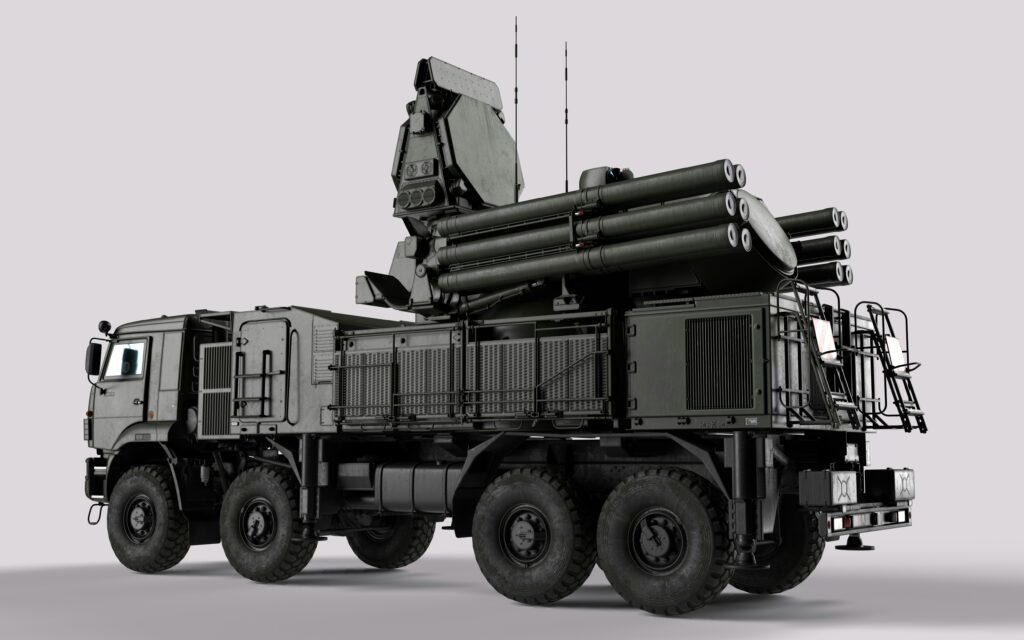
For most of the postwar era, defense has been an industry apart. It operated on different procurement timelines, with different incumbents, on different cost structures and with different innovation cycles than the rest of the technology economy. The major defense primes, including Lockheed Martin, Northrop Grumman, BAE Systems, Thales and Saab, built complex hardware platforms over development cycles measured in decades, sold them to a small number of government customers and competed primarily on engineering excellence and political relationships rather than commercial speed. Software was a component of these platforms, not the platform itself. Innovation flowed predominantly from defense to commercial uses, not the other way around. The defense industry was, in effect, a closed system that the rest of the technology economy interacted with only at carefully managed boundaries.
This model is now breaking down, and the implications go well beyond the defense sector itself. Defense is becoming a software business, and the structural shifts reshaping it are the same shifts that have already reshaped most other technology-intensive industries: AI, autonomous systems, continuous deployment, software-defined platforms. The question for software-intensive companies operating in or adjacent to defense is no longer whether to engage with the sector but on what terms.
Three shifts are occurring simultaneously and reinforcing each other. The first is technological. The modern battlefield is increasingly defined by software: autonomous systems, AI-driven sensor fusion, real-time targeting and battlefield management, electronic warfare. Hardware platforms still matter enormously, but the source of differentiation is increasingly the intelligence layer running on them. A drone is now valuable less for its airframe than for the AI that allows it to operate autonomously, coordinate with other systems and adapt to electronic countermeasures. A combat aircraft is increasingly defined by its sensor fusion software and human-machine interface rather than its raw aerodynamic capabilities. This is the same architectural shift that has played out in cars, industrial equipment and consumer electronics over the past decade, now arriving in defense.
The second shift is geopolitical. The Russia-Ukraine war has demonstrated, in real-time and at substantial scale, that software-defined warfare is operationally decisive. Drones and AI-enabled systems are reshaping tactical doctrine. Speed of capability development matters more than the legacy weight of incumbents. Conflicts are no longer won by the side with the most expensive platforms but by the side that adapts faster, integrates better and deploys at scale. European governments have absorbed this lesson and are responding with substantial commitments. Germany has committed to raising defense spending to 3.5 percent of GDP by 2029. The UK has launched a 400-million-pound five-year program specifically for AI-driven defense technology. Across Europe, defense budgets are rising at a pace not seen since the early Cold War.
The third shift is procurement. European governments are deliberately opening defense procurement to non-traditional suppliers, recognizing that the speed and software capabilities they now require don’t exist in adequate measure within the traditional prime contractor base. This is a significant departure from decades of practice. The result is an unprecedented wave of capital and entrepreneurial energy flowing into European defense tech, specifically. European defense, security and resilience startups raised a record 8.7 billion dollars in 2025 – three times the level of three years earlier. AI-specific defense startups attracted approximately 929 million dollars in 2025 alone. The continent now has three defense unicorns, all software-led, and the trajectory suggests more will follow.
Helsing, headquartered in Munich and founded in 2021, is the headline story. The company raised 600 million euros in a Series D round in June 2025, led by Daniel Ek’s investment firm Prima Materia, valuing the company at 12 billion euros. This is the largest funding round ever raised by a European defense startup. Helsing originally focused on AI software for battlefield sensor fusion and decision support, taking the data from disparate sensors, weapons systems and intelligence sources and fusing it into a coherent operational picture in real-time. In 2024, it expanded into autonomous strike drones and in 2025, it unveiled the CA-1 Europa autonomous fighter jet system. The company works with the governments of Germany, Estonia, the UK and Ukraine, and counts Saab as both a customer and an investor.
The Saab participation is worth flagging for industrial readers specifically. Traditional European defense primes aren’t standing aside from the new wave; they’re actively investing in and partnering with it. The strategic logic is clear: The speed and AI capabilities of the new defense tech companies are difficult for incumbents to build organically, but they’re accessible through partnership and investment.
Quantum Systems, also based in Munich, is the textbook illustration of the dual-use thesis. Founded in 2014 by Florian Seibel, a former German army pilot, it originally built drones for civilian uses, including agricultural monitoring, infrastructure inspection and mapping. After Russia’s invasion in 2022, Ukraine’s drones were rapidly adapted for military reconnaissance and deployed on the front line, where they’ve provided some of the conflict’s most operationally significant intelligence gathering. Quantum’s sales tripled in 2025 to 300 million euros and the company achieved unicorn status with a valuation reported at 3 billion euros.
The point worth drawing out is that the boundary between commercial and defense use of the underlying technology is porous, contextual and shifting rapidly. The same drone that maps a farm can monitor a border and the same AI that optimizes agricultural spraying patterns can coordinate reconnaissance flights. The strategic question for companies operating in this kind of dual-use space is no longer whether to acknowledge the duality but how to navigate it.
Tekever, the Portuguese AI-enabled aerial systems company, illustrates a third pattern. It became a unicorn in 2025, with its AR3 drones having flown combat missions in Ukraine and demonstrated sixteen-hour flight endurance. In May 2025, the company secured a contract with the UK Royal Air Force as part of the broader 400-million-pound UK defense AI program.
What makes Tekever particularly interesting is that it’s profitable. This is genuinely unusual for a defense tech startup at this scale. It signals that the new model – software-led, AI-enabled, smaller and faster than incumbents – isn’t only commercially viable but capable of operating at margins that traditional defense businesses have historically struggled to achieve. The implication is significant. The new defense tech isn’t a VC-subsidized phenomenon dependent on continuous funding rounds. It is, increasingly, a sustainable category of business in its own right.
The strategic implications for software-intensive companies are worth drawing out explicitly. First, the dual-use thesis is genuinely structural rather than incidental. Most defense capabilities now have meaningful commercial parallels (autonomous systems, AI-driven analytics, satellite imagery, secure communications) and most commercial capabilities have meaningful defense applications. The companies that succeed here are those that can serve both markets without being captured by either. This raises interesting strategic questions for software-intensive industrial companies that have historically maintained strict separation between commercial and defense work. The separation is becoming harder to maintain as the underlying technologies converge, and the strategic cost of avoiding defense engagement entirely may be higher than it has been in the past.
Second, the procurement model is changing in ways that reward exactly the capabilities that software-intensive companies have been building. Speed of iteration, software engineering discipline, AI infrastructure, continuous deployment, evaluation as engineering practice. These are the capabilities the new defense procurement model values, and they’re the capabilities that traditional defense primes have generally lacked. This is a significant repositioning opportunity for industrial companies whose core capabilities are increasingly software rather than hardware. Saab’s investment in Helsing is one signal of how an established prime is responding to this opportunity. Whether other European industrial conglomerates will follow is among the more interesting open questions for this decade.
Third, the value capture question is unsettled and genuinely interesting. The traditional defense primes have decades of customer relationships, security clearances, integration expertise and political access. The new defense tech companies have software speed, AI capability and capital. Each has something the other needs. Whether the long-term winners will be primes that absorb startups, startups that build their way into prime status or new partnership models that share value differently isn’t yet clear. This is a platform dynamics question of the kind that has played out in other industries before, and the patterns are likely to repeat with sector-specific variations.
None of this is to suggest that defense tech deployment is straightforward. Procurement cycles, even in the streamlined new model, remain longer than commercial procurement. Security and certification requirements add real engineering overhead that pure commercial businesses don’t face. The ethical questions around autonomous and AI-enabled lethal systems are genuine, not resolved by enthusiasm or capital, and require companies engaging with this space to think carefully about which applications they will and will not pursue. Talent recruitment is more complicated than for commercial work, since some engineers won’t work on defense applications at all. And the fundamental dependence on government customers concentrates revenue risk in ways that diversified commercial businesses can typically avoid. These are real constraints. They don’t make defense tech an inappropriate area of activity, but they do make it a strategically and ethically complex one that requires deliberate engagement rather than opportunistic participation.
The broader implication is that defense is no longer a sector that software-intensive companies can ignore on principle or engage with only through the narrow traditional procurement channels. It’s becoming a software business in which the capabilities developed for commercial purposes are increasingly central. Whether to engage, how to engage and on what terms are now genuine strategic questions for European industrial companies and the wider software-intensive economy. The answers will vary by company, by national context and by ethical posture. But the questions themselves can no longer be deferred. To end with Sun Tzu: “In the midst of chaos, there’s also opportunity.”
Want to read more like this? Sign up for my newsletter at jan@janbosch.com or follow me on janbosch.com/blog, LinkedIn (linkedin.com/in/janbosch) or X (@JanBosch).
